Today, artificial intelligence has quietly become a natural part of everyday life. When we wake up to a phone alarm, choose the fastest route in traffic, or scroll through content recommendations on digital platforms, AI-powered systems are working in the background. But are we truly aware of it? How often do we stop and think about how many times we interact with AI in a single day?
AI refers to systems that can learn from data, analyze information, and improve over time. I often use this example: AI is like a modern library, and each AI program is like a librarian who finds exactly what you’re looking for. Thirty years ago, we relied on encyclopedias. Then we began using search engines like Google to find information. Today, we use AI programs. Over time, the time required to access information has decreased dramatically.
Unlike traditional software, which operates based on predefined rules, AI systems learn from vast datasets and generate faster and more accurate results. This raises an important question: what truly makes artificial intelligence powerful—the algorithms themselves, or the data that feeds them?
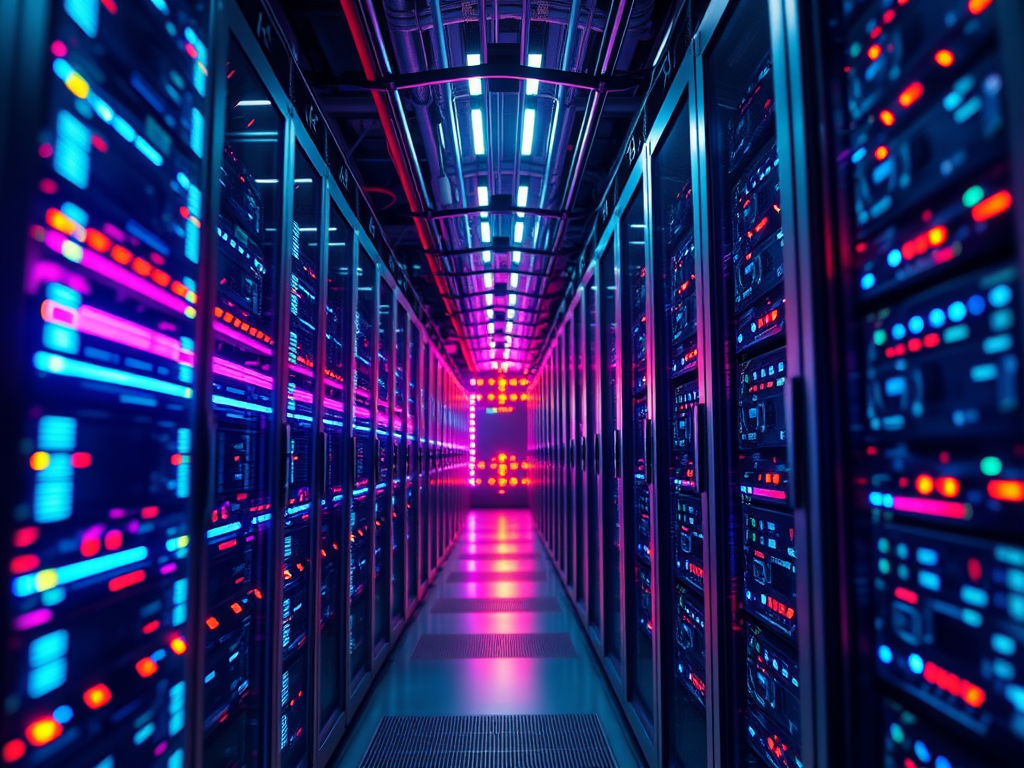
Today, AI is actively used in many areas, from social media and banking to navigation and enterprise applications. However, behind this widespread usage lies a massive infrastructure that is often overlooked. Why does artificial intelligence require so many resources? Why does every new AI application increase the demand for data center capacity?
In the digital ecosystem, data can be considered the brain, while data centers function as the muscles. Just as the brain requires muscles to transform decisions into action, data requires data centers to process, transmit, and operationalize information. Without robust and diverse data centers, sustainable data flow would not be possible.
The answer to these questions lies in global fiber connectivity infrastructure. Fiber networks spanning the world form the backbone of the internet and enable seamless global communication. At the same time, this infrastructure provides access to enormous pools of data accumulated worldwide, making it possible to reach information, applications, and systems quickly and securely without geographical limitations. But here is the critical point: are these networks used only by humans?
Today, machines, sensors, applications, and systems are constantly communicating with one another. As a result, data is generated everywhere, transferred continuously, and often processed in real time. As real-time data processing becomes more widespread, why do speed and low latency become so critical? And when we talk about speed, are we referring only to network performance—or something much broader?
In reality, speed also means high-capacity IT infrastructure, powerful servers, GPUs, and AI accelerators. These technologies are essential for training AI models and running AI applications efficiently. However, as computing power increases, electricity consumption and heat generation inevitably rise as well. How prepared are traditional data centers to handle this growing load?
Increasing computational capacity is not only a technical issue; it is also a major energy planning challenge. As AI systems scale, the energy demand of data centers grows exponentially. At this point, not only energy efficiency but also the sustainability and continuity of energy supply become critical.
Today, renewable energy sources offer important solutions for data centers. However, in the future—particularly for high-density, large-scale AI clusters—facility-based energy generation models may become more prominent. In this context, integrated nuclear energy solutions such as Small Modular Reactors (SMRs) could be evaluated as a potential alternative to meet the increasing and uninterrupted energy demands of data centers.
Facility-based nuclear energy production, particularly through uranium-fueled systems, offers high energy density and continuous power generation capacity. Considering that AI infrastructures are required to operate 24/7 without interruption, energy continuity becomes a strategic necessity.
These developments demonstrate that data centers are being redesigned not only in terms of digital infrastructure but also in terms of energy architecture. In the future, data centers may evolve beyond simple processing facilities into integrated technology campuses capable of generating their own energy.
At this point, it becomes clearer why data centers are evolving so rapidly. Increasing computational demands have made conventional designs insufficient. As a result, liquid cooling systems, direct-to-chip cooling solutions, UPS systems designed for high-density environments, high-capacity intelligent PDUs, and open-frame high-density rack designs are becoming increasingly common in modern data centers. When all these technologies come together, what emerges is no longer a simple data center, but a complex ecosystem where power, cooling, networking, and IT infrastructure must operate in perfect harmony.
Although AI applications appear to users as software or digital services, behind them lie extremely powerful physical infrastructures. Without these infrastructures, could artificial intelligence truly function?
At this stage, artificial intelligence can no longer be considered just a software development topic. It represents an end-to-end infrastructure transformation—from data generation and network connectivity to computing power, energy management, and cooling systems. As more data is produced, more systems become interconnected, and greater computational power is required, where will this transformation lead?
Perhaps the real question is this: is artificial intelligence transforming data centers, or is the evolution of data centers what truly makes artificial intelligence possible?
I will reach out to another points in my upcoming blog posts. Wishing you a smooth path ahead—may everything in your life run as smoothly and beautifully as a well-designed data center. Here’s to success and happiness!



 Muhammed Baki SUMER